UK housing benefits to be slashed: analysis here.
The government spin was that their cuts were all about capping benefits for a small number of families in inner London. But even their own reports spell out the truth – these cuts will hit hundreds of thousands, will increase homelessness and overcrowding, disrupt the education and attainment of poor children, disrupt services for disabled people and force people on low incomes into even poorer quality housing.
Wednesday, 8 December 2010

(from the Tuesday December 7th edition of my local paper, the South London Press)
FOUR men have been cleared of killing an innocent teenager in a drive-by shooting.
The group were accused of gunning down 18-year-old Ryan Bravo as he entered a shop to buy a pint of milk on August 6, 2008.
It is claimed Ryan was caught up in a clash between the Organised Crime, or OC, and the Peckham Young Guns.
Jurors have heard that the OC gang were chasing two rival gang members who pushed past Ryan to hide in the Costcutters store, in Camberwell Road, Walworth. In the hail of bullets, Ryan was hit once, in the back and died.
Prosecutors said the five were Terrell Lewis, 20, Nathaniel Bailey, 19, Nathaniel Grant, 19, and Anthony McKenzie, 21, and Ashley Bucknor, 21.
But halfway through the Old Bailey trial, all but Bucknor were cleared on the direction of the judge Gerald Gordon. He ruled there was no case to answer due to insufficient evidence.
It is claimed the murder was in revenge for a shooting on the Myatts Field Estate in Brixton earlier that same day.
Bucknor, of no fixed address, denies murder.
Eighteen years of age.
shot dead for buying a pint of milk.
another one of the most essential sites anywhere right now is the UK's Channel 4 page on the Sri Lankan civil war
Monday, 6 December 2010
YOU COULDN'T MAKE IT UP
the undemocratic Thai govt is more bothered about Bangkok vendors selling flip-flops with satirical images printed on the soles than they are by the fact that they (the Thai govt) massacre their own citizens by the dozen for the, er, crime of protesting the Thai govt's increasing authoritarianism
the undemocratic Thai govt is more bothered about Bangkok vendors selling flip-flops with satirical images printed on the soles than they are by the fact that they (the Thai govt) massacre their own citizens by the dozen for the, er, crime of protesting the Thai govt's increasing authoritarianism
Tuesday, 30 November 2010
i note the wiki for the Scottish painter Peter Howson (an artist who, among other pursuits, cranks out enjoyably large canvases with visceral gusto, and does some corking album covers, as my flatmate and i were saying to each other) refers to his time as an official war artist during the "Bosnian Civil War".
this precise phrase, civil war, is actually used twice in the wiki (at time of posting).
it's almost certainly an innocent tag but the word civil really needs to be dropped from the description.
the Bosnian war was a war of federal Yugoslav and Serb aggression; 'civil' could imply an attempt to get into moral equivalences.
there should be absolutely no room for anything remotely resembling equivalency when discussing the murderous assault on Bosnian Muslim society that was the major part of this war (that obviously tragically affected all communities in Bosnia), and to deliberately say otherwise is a rank piece of ethical bankruptcy that must be met with continuous contempt.
no room at all.
if you know about the subject, you'll be familiar with the name (and probably this forthcoming hat tip), and no apologies for linking again to the Marko Hoare article 'What do the figures for the Bosnian war-dead tell us ?'
Monday, 29 November 2010
in a shop the other day and their stereo was playing Do they know it's Christmas (yes that time of the year is looming), which reminded me of two things (by bloggers i occasionally link to anyway) i wanted to excerpt a bit and link to.
both articles are by the Barders.
Brian Barder was the British ambassador to Ethiopia during the mid-1980s when famine struck Ethiopia and the international community responded with famine relief aid; five years ago he wrote this letter to the Guardian in protest at a David Rieff article then doing the rounds (i remember a few blogging peers finding Rieff's line sympathetic; i was personally ambiguous).
the BBC has recently apologised for broadcasting a load of old turkey about the international famine relief effort in a stupidly misleading World Service documentary broadcast this past spring, in March.
Barder has blogged more than once on his site about this, but it's worth reading in full his excellent account from late March taking the BBC to task. it's here, and i want to quote in full the summary at the start of his piece (it's a fairly long article overall).
the final two sentences of Barder's summary are really, really important, and, i fear, may well be prescient. (even with the BBC apologising - after Brian wrote this particular article, it must be said - the damage has been at least partly done, for sure.)
A BBC World Service documentary programme broadcast in early March 2010, and the advance publicity for it, gave the impression that a huge proportion of the famine relief aid given by the international community to Ethiopia in the 1980s was diverted from starving people to buy arms and ammunition for use in the civil war then raging in northern parts of the country. The specific allegations made by the BBC about the diversion of aid related only to the tiny proportion that was supplied by some NGOs to rebel-held areas, a distinct and very small part of the total relief effort in Ethiopia at the time. The incorrect inference has been drawn that a substantial part of the total aid to Ethiopia, including the much larger sums provided to the government-ruled parts of Ethiopia, were diverted for military use, including the aid raised and managed by Band Aid. While the programme did not make this claim explicitly (just as well, since it would certainly have been exposed as false), either deliberately or negligently the BBC has allowed, and to some extent encouraged, this misunderstanding of its findings, and has failed to point out (other than sotto voce) that its allegations related to a quite separate, and very small, part of the aid. As a result, there is now a widely held and completely false perception that a substantial proportion of the aid given to Ethiopia in the 1980s was diverted for military use. This has potentially disastrous implications for public attitudes to future emergency relief appeals, and to development aid generally.
Brian's son Owen is a development and aid specialist who lives in Addis.
earlier this month, on November 4th, at his blog, Owen posted this piece.
the introduction gives a good flavour of his feelings.
It has entered our collective consciousness that a large part – perhaps as much as 95 per cent – of the aid given to Ethiopia during the 1980s famine was diverted for military use. This misapprehension was caused by a misleading programme on 4th March, compounded by the BBC’s publicity for the programme on television and radio and online.
As Mark Twain remarked, “a lie will fly around the whole world while the truth is getting its boots on”.
Today the BBC has apologised. The apology is abject, and rightly so
Friday, 19 November 2010
Wednesday, 17 November 2010
Now the Tories are pouring out money in propaganda of all sorts and are hoping by this organised sustained mass suggestion to eradicate from our minds all memory of what we went through. But, I warn you young men and women, do not listen to what they are saying now. Do not listen to the seductions of Lord Woolton. He is a very good salesman. If you are selling shoddy stuff you have to be a good salesman. But I warn you they have not changed, or if they have they are slightly worse than they were.
- Aneurin Bevan, 3 July 1948
That's a sin
- Iain Duncan Smith, 11 November 2010
Mr Duncan Smith's defenders (including Nick Clegg in this paper on Wednesday) like to compare the scale and intention of his plans with the Beveridge report of 1942. They forget there was a second Beveridge report, in 1944: Full Employment in a Free Society. He knew that without jobs, the welfare state wouldn't work.
- The Guardian, 12 November 2010
There are at least 18 millionaires in the cabinet...Though few people seemed to notice, on 3 November, a Treasury minister named Lord Sassoon served notice that the coalition's work on City bonuses was done: "The government has taken action to tackle unacceptable bonuses in the banking sector," he said, and that seemed to be that. Six days later, Barclays announced that its latest bonus pot would total £1.6bn – which is about a third of what the government currently spends each year on university teaching. The annual season of big executive payouts is about to commence once again
- John Harris, 12 November 2010
The latest wheeze is the welfare reforms being proposed. I haven't read them in detail, but the language is clear enough; penalties for refusing a job, compulsory community work, and the idea of unemployment as a lifestyle choice. Underpinning it all is the dreadful notion of dependency culture. I hate this concept. I can find little in the way of empirical grounding and even less of empathy and understanding. In many ways, and I intend to cover this in a subsequent post, it is anti-liberal and even authoritarian in its import. It brings no great insights, it is simply a regurgitation of the worst prejudices of the Philosophic Radicals of the early 19th Century. Its attraction lies in it being a neat way of making punitive policies sound compassionate - 'tough love' in the revolting parlance of the Clinton era. Government as Victorian father. Spare the rod and spoil the child.
I want to make a stand for dependency. What is wrong with it? Why should some people not be dependent? After all, we are all dependent at some time or other in our lives. When we are children, ill or old are obvious examples of times when we cannot function without support. And though we prize our independence, it is a sign of a civilised society that those who fall dependent at any one time are cared for in whatever way they can be. Even more, like it or not, we cannot escape the ties of emotional dependence. Actually, we treasure them and those that don't have them long for them. We are all dependent. Love is not tough.
Dependency is not a stigma, it is an inescapable part of human life. We need dignity in dependence.
- Peter Ryley, 12 November 2010
- Aneurin Bevan, 3 July 1948
That's a sin
- Iain Duncan Smith, 11 November 2010
Mr Duncan Smith's defenders (including Nick Clegg in this paper on Wednesday) like to compare the scale and intention of his plans with the Beveridge report of 1942. They forget there was a second Beveridge report, in 1944: Full Employment in a Free Society. He knew that without jobs, the welfare state wouldn't work.
- The Guardian, 12 November 2010
There are at least 18 millionaires in the cabinet...Though few people seemed to notice, on 3 November, a Treasury minister named Lord Sassoon served notice that the coalition's work on City bonuses was done: "The government has taken action to tackle unacceptable bonuses in the banking sector," he said, and that seemed to be that. Six days later, Barclays announced that its latest bonus pot would total £1.6bn – which is about a third of what the government currently spends each year on university teaching. The annual season of big executive payouts is about to commence once again
- John Harris, 12 November 2010
I want to make a stand for dependency. What is wrong with it? Why should some people not be dependent? After all, we are all dependent at some time or other in our lives. When we are children, ill or old are obvious examples of times when we cannot function without support. And though we prize our independence, it is a sign of a civilised society that those who fall dependent at any one time are cared for in whatever way they can be. Even more, like it or not, we cannot escape the ties of emotional dependence. Actually, we treasure them and those that don't have them long for them. We are all dependent. Love is not tough.
Dependency is not a stigma, it is an inescapable part of human life. We need dignity in dependence.
- Peter Ryley, 12 November 2010
Saturday, 23 October 2010
Thursday, 21 October 2010
Tuesday, 19 October 2010

it seems almost like a sort of cruel joke that the Conservative party conference this year took place in Birmingham city centre.
the downtown of Britain's second city is part of the Birmingham Ladywood parliamentary constituency, which is one of the most deprived areas in the UK.
Ladywood has the worst child poverty rates of all 650 UK parliamentary constituencies.
it also has the highest unemployment rate of any constituency.
(incidentally, the neighbouring constituencies of Birmingham Hodge Hill and Birmingham Erdington have, respectively, the second and fifth worst rates currently, with other neighbouring constituencies also doing badly.)
and so it came to pass that a politician who represents one of the wealthiest constituencies (in fact, very wealthy by some measures) went to conference, in this suffering zone, to address us about a desire to inflict his brand of sadistic aristocratic economics on everybody else.
(he should weather the storm himself just about OK you'd imagine, if only owing to his £4million trust fund.)
whether it's Tory and Lib Dem buzzwords about fairness proving to be so much demonstrable rubbish, Chancellor George Osborne's laughably threadbare defence of his ridiculously compromised sources, or a potential assault on the fabric of our cities (a severe assault at that), there is much evidence to suggest that the coalition approach to tackling the British deficit may be misguided, although, from the point of view of the Chancellor, what does that matter?
attacking public services is ideological for this guy, and not just incidental to current economic conditions.
growth, after all, will return sooner or later; it's just a shame a concern for wealth and income differences is for wimps (it's certainly not something the Tory party appear to care for).
my friend Ruth wondered re Osborne, that, as a constituency MP for a very wealthy area with relatively few social problems, how much experience he has of life at the deep end.
compare Osborne with recently defeated Labour leadership challenger David Miliband.
Miliband represents South Shields in northeast England, a far less affluent constituency than Osborne's Tatton (a semi-rural area of suburban villages in Manchester's commuter belt).
Miliband apparently once remarked how the problems of constituents (someone facing eviction from their home, and someone facing deportation following an asylum claim, were two examples cited) were a slap in the face to him as a young constituency politician (he comes from a comfortable background and had worked in a policy role in glamorous central London for some time).
now, with all due respect to the people of Tatton, it is inevitable that, say, South Shields - let alone Birmingham Ladywood - will have a greater proportion of beleaguered constituents in the sort of real trouble that demands the intervention of a public servant, not just somebody's private purse.
good for the voters of Tatton, of course, good for them, but it does raise an interesting point about Osborne, and would ideally have more of us asking more urgent questions of him and his ideas given many of the toughest proposals he will be unveiling will, in general, surely not be felt that much in Tatton (though will in all probability be felt keenly in Birmingham Ladywood).
sadly - as Krishnan Guru-Murthy acknowledges - the Chancellor knows the way he wants to go; an observation donpaskini also made recently:
Poorly designed child benefit cuts which take away benefits for some families on £44,000 while giving them to other families on £86,000: £1 billion.
Giving party activists something to cheer by cutting benefits for homeless families in temporary accommodation: £150 million
Not having to explain where the other £13 billion in welfare cuts is going to fall: priceless.
There are some things money can't buy. For spinning savage cuts to the poorest, there's Tory Party conference.
Friday, 15 October 2010
i wonder if certain powerful men in Ottawa have read this?
Sri Lanka: Groups Decline to Testify Before Flawed Commission
Government War Panel Lacks Mandate, Credibility, Independence
Sri Lanka: Groups Decline to Testify Before Flawed Commission
Government War Panel Lacks Mandate, Credibility, Independence
An asylum seeker who was being deported on a flight from Heathrow begged passengers to help him moments before he collapsed and died beneath three security guards, according to a new witness who has spoken to the Guardian.
[...]
An engineer who works Angola's rich oil fields alongside other western expatriates, Michael said Mubenga's death spoke to hypocrisy in global border control. "You have got a man deported from over there. Did you ever stop to think how many British are over here, making £400 or £500 a day in Angola?"
Tuesday, 12 October 2010
from that Globe and Mail piece noted on one's Twitter earlier today: "Thailand has not signed onto the international conventions that can make refugee removals time-consuming."
but of course!
Thailand's neighbours only include such paragons of virtue as the Myanmar junta and the Laotian dictatorship.
in addition, the likes of Vietnam and China are nearby. (and Sri Lanka, granted.)
time time time, we are very busy and pressed for time, we are professional people, we do not have time for all this.
political language decoded: when wealthy, (relatively) powerful governments such as Canada or Australia use some sort of variation on a 'Tamil boat crisis' or such, they are in fact discussing a virtual handful of bedraggled Sri Lankans fleeing who knows what.
in a slightly less imperfect world, the word "crisis" would be reserved for momentous events causing widespread social upheaval, such as the genuine villainy that was what Margaret Thatcher did to much of central and northern Britain in her time in office.
in a slightly less imperfect world, the word "crisis" would be reserved for momentous events causing widespread social upheaval, such as the genuine villainy that was what Margaret Thatcher did to much of central and northern Britain in her time in office.
Sunday, 10 October 2010
STAY HYDRATED
concerned about the deeply pernicious Tory lies taking root in the UK about Labour's handling of the economy ('everything is Labour's fault' etc), and with so many willingly credulous dicks propping up the UK press corps and giving these lies an easy ride, it's got to be worth lauding when someone stands up and challenges such ludicrous falsehoods.
so, then, with such lies abroad, Brian Barder fisks "six Tory myths" here.
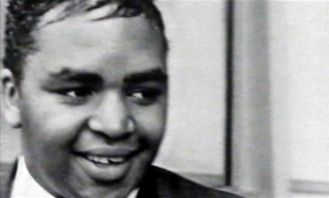
elsewhere: Spotify, thank you for Solomon Burke (RIP), for Art Blakey's Jazz Messengers with Thelonious Monk, and for the Pearson Sound tunes Wad (the longer 5 minute + version that is news to me), and Indelible. oh and the Brownswood Recordings compilation Brownswood Electr*c.
i want to go mental on a dance floor to Wad.
should and probably could have got in with a beautiful young woman in a pub last night but am moving city on Wednesday, so didn't really see the point.
you learn more from a few Private Eye columns in one afternoon than an entire month of mainstream British journalism, swear it.
concerned about the deeply pernicious Tory lies taking root in the UK about Labour's handling of the economy ('everything is Labour's fault' etc), and with so many willingly credulous dicks propping up the UK press corps and giving these lies an easy ride, it's got to be worth lauding when someone stands up and challenges such ludicrous falsehoods.
so, then, with such lies abroad, Brian Barder fisks "six Tory myths" here.
elsewhere: Spotify, thank you for Solomon Burke (RIP), for Art Blakey's Jazz Messengers with Thelonious Monk, and for the Pearson Sound tunes Wad (the longer 5 minute + version that is news to me), and Indelible. oh and the Brownswood Recordings compilation Brownswood Electr*c.
i want to go mental on a dance floor to Wad.
should and probably could have got in with a beautiful young woman in a pub last night but am moving city on Wednesday, so didn't really see the point.
you learn more from a few Private Eye columns in one afternoon than an entire month of mainstream British journalism, swear it.
Subscribe to:
Posts (Atom)